
CONTACT FORM
Quisque tincidunt ornare sapien, at commodo ante tristique non. Integer id tellus nisl. Donec eget nunc eget odio malesuada egestas.
SEND
Location & Address
Login form
Sorry, User can NOT register!

Green Homes - Bozeman, Montana

Green Homes

Sustainable Living • Bozeman, Montana

Green Homes
in Bozeman

A green home is more than an environmental statement. It is a smarter, more efficient way to own property that can reduce your costs, improve your comfort, and protect the value of your investment over time.
5
Key green home benefits
Lower
Utility costs
Higher
Resale value potential
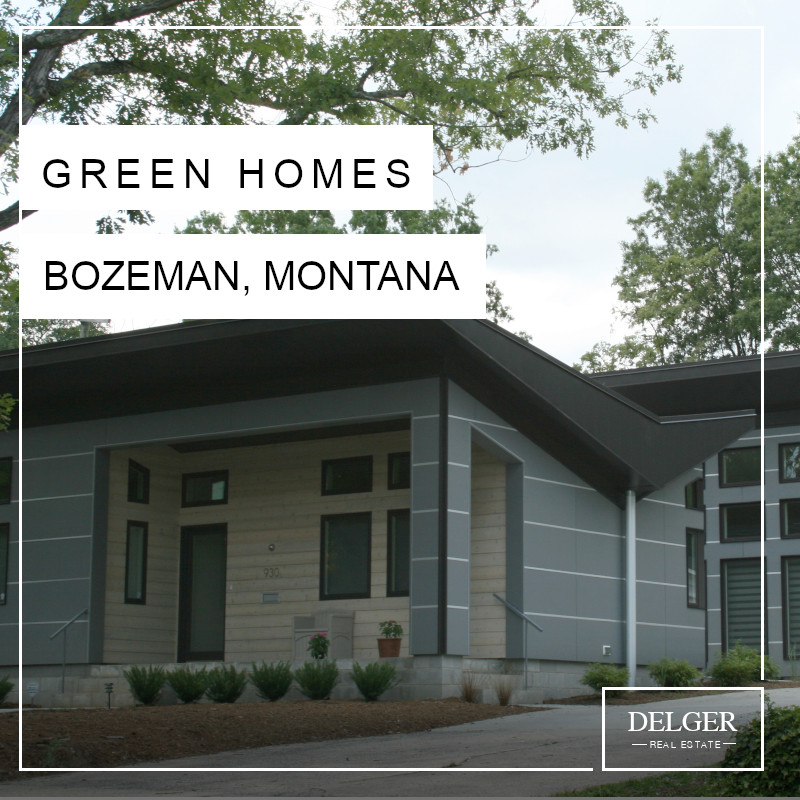
Green Homes in Bozeman, Montana
Green homes in Bozeman, Montana are designed to minimize environmental impact and maximize energy efficiency.

A green home is a residence that has been designed, built, and operated in a way that minimizes its impact on the environment and maximizes its energy efficiency. Through a combination of smarter materials, better systems, and more efficient design, green homes give homeowners a meaningful advantage in both cost and comfort.

What makes a home green

Green homes incorporate a range of features that work together to reduce energy consumption and environmental impact. Here is a look at the five most significant benefits for homeowners in Bozeman.

01

Energy efficiency

Green homes are designed to use less energy to heat and cool the living space. Better insulation, high-performance windows, and efficient mechanical systems work together to lower monthly utility bills and reduce your overall carbon footprint.

02

Improved indoor air quality

Materials and design choices in green homes prioritize the health of the people living inside. Low and no-VOC paints and finishes, combined with energy-efficient air filtration systems, result in cleaner, healthier indoor air compared to conventionally built homes.

03

Increased durability

Green homes are frequently built with durable, low-maintenance materials that are less likely to wear out or require costly repairs over time. The upfront investment in quality materials often translates into lower long-term ownership costs.

04

Higher resale value

Demand for energy-efficient homes is growing. Green homes are increasingly attractive to buyers, and properties with verified green features often command a premium when it comes time to sell.

05

Lower environmental impact

By using fewer resources and generating less waste, green homes contribute to a more sustainable built environment. For homeowners who want their property to reflect their values, the environmental benefits are a meaningful part of the equation.

“Green homes may also be designed to have a smaller footprint, with a focus on compact and efficient use of space. By reducing energy and resource consumption, green homes can save homeowners money on utility bills and contribute to a more sustainable future.” — Delger Real Estate

You do not need a green home to make an impact

Minimizing a home’s environmental footprint and maximizing its energy efficiency does not require building or buying a certified green home. For both real estate investors and individual homeowners, Real Estate Impact Management and smart home management strategies can deliver substantial cost savings and meaningfully reduce the environmental impact of an existing property.

Delger Real Estate advises clients on practical ways to reduce the environmental impact of their homes, regardless of whether those homes were built to green standards. Small changes in how a property is managed, maintained, and upgraded can add up to significant savings over time.

Want to learn more about greener homeownership?

Contact Delger Real Estate about
Real Estate Impact Management.

Contact Us

Real Estate Impact Management

Smart Home • Property Management

Real Estate
Impact Management

Buildings account for more than 40% of global energy use and as much as one-third of global greenhouse gas emissions. Smart property management practices can deliver meaningful cost savings while reducing your environmental footprint.

40%
Of global energy used by buildings
49%
Of home energy bill spent on heating and cooling
15%
Potential heating and cooling savings from insulation
Real Estate Impact Management
Real Estate Impact Management and Smart Home Management reduce utility costs and environmental impact for homeowners and investors alike.

For both real estate investors and individual homeowners, Real Estate Impact Management and Smart Home Management can mean substantial cost savings and a meaningfully reduced environmental footprint. The strategies involved range from simple no-cost habits to targeted upgrades that pay for themselves quickly through lower utility bills.

Below is a practical overview of the four areas where impact management delivers the greatest results for most properties.

01   Reducing water usage

Water waste is one of the most overlooked sources of unnecessary expense for homeowners. The average North American household wastes about 10,000 gallons of water from household leaks every year, and roughly one in ten homes have severe leaks wasting 90 gallons or more per day.

The toilet

The most common water waster

27%
Of a typical home’s water usage comes from toilet flushing

A constantly running toilet wastes approximately eight gallons per hour, or 200 gallons per day. Left unnoticed, a running toilet could waste over 6,000 gallons per month. Toilet leaks tend to be less visible than faucet leaks, making them particularly costly. Delger Real Estate can help you identify whether your toilets and sinks are leaking.

Everyday habits

Other frequent causes of high water bills

Leaks and drips are not the only contributors to elevated water usage. Common everyday habits add up significantly over the course of a month and year. The table below shows how quickly these habits compound into real cost.

Common water-wasting habits
Running the dishwasher partly full320 gal / year
Leaving the tap running while brushing teeth8 gal / day
Letting water run for five minutes while hand-washing dishes10 gal / each time
Failing to fix a broken sprinkler head2,400 gal / month

Frequent causes of water damage

Some leaks drain harmlessly into a sewer line, wasting water and money without causing structural damage. Others drip onto floors, walls, and building materials, leading to repair costs far greater than any utility bill. Beyond sinks and toilets, these are the locations to monitor closely.

Common sources of damaging water leaks
Washing machine hoses
Refrigerator
Dishwasher
Plumbing under kitchen and bathroom sinks
Pipes
Roof
Windows and doors
“Whether you are concerned about high bills or water damage, it is worthwhile to find and stop leaks quickly. Delger Real Estate can help you identify and address water leaks before they become expensive problems.” — Delger Real Estate

02   Reducing electricity usage

Reducing electricity consumption does not require a major renovation. Some of the most impactful changes are also the simplest and least expensive to implement.

Replacing old incandescent light bulbs with modern LED lighting is one of the highest-return upgrades available to any property owner. LED lighting uses significantly less energy, reducing electricity costs. It lasts considerably longer, reducing maintenance costs. It also generates less heat, lowering the load on cooling systems during warm months. Beyond lighting, turning off power sources when not in use is one of the easiest habits that consistently reduces energy bills over time.

03   Reducing heating and cooling costs

According to the U.S. Department of Energy, 49% of a home’s total energy bill is spent on heating and cooling. This is where the single largest opportunity for cost reduction exists in most properties.

Insulation

Most homes are under-insulated

90%
Of U.S. single-family homes are under-insulated (NAIMA)

Homes built before 1960 are particularly vulnerable. When insulation is lacking, heating and cooling equipment must run longer to reach the desired indoor temperature, increasing utility costs, shortening equipment life, and raising the property’s environmental impact. The EPA estimates homeowners can save 15% on heating and cooling costs by adding insulation in attics, crawl spaces, and basement rim joists. An energy audit is the best way to identify where to focus first.

HVAC

Maintenance lowers costs and extends equipment life

Heating, ventilation, and air conditioning systems control the temperature, humidity, and air quality of a home. Even a high-efficiency system loses performance when poorly maintained. Good HVAC maintenance results in lower energy consumption and extends the useful life of the equipment. Delger Real Estate recommends that filters and systems be inspected at regular maintenance intervals. A well-maintained system costs homeowners less over time and reduces the property’s overall energy footprint.

04   Reducing air leaks

Air leaks are one of the most underestimated contributors to high utility bills. Reducing drafts in a home can produce energy savings of 10% to 20% per year, and the home is generally far more comfortable as a result.

Start by identifying obvious drafts indoors, checking for gaps along baseboards, at the edges of flooring, and at junctures between walls and ceilings. On the exterior, pay close attention to areas where two different building materials meet. Other places to inspect include windows, doors, lighting and plumbing fixtures, switches, electrical outlets, and fireplace dampers. Addressing these areas systematically is one of the most cost-effective improvements available to most homeowners and property investors.

Want to reduce costs and environmental impact?

Contact Delger Real Estate to learn more
about Real Estate Impact Management.

Contact Us