
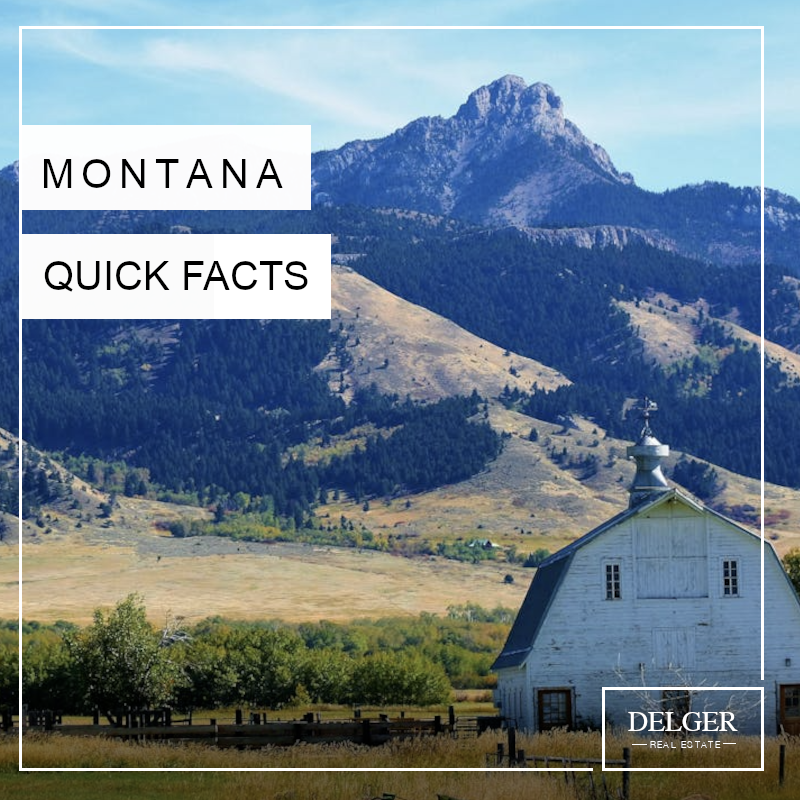
Montana
Quick Facts
The Treasure State holds more records than most people realize. Here is a look at the numbers that make Montana unlike any other place in the lower 48.
Montana at a glance
| Nickname | The Treasure State |
| Statehood | 1889, 41st state |
| Population (2020) | 1,079,619 |
| Land area | 147,046 square miles |
| Highest point | Granite Peak, 12,799 feet (3,899 m) |
| Lowest point | Kootenai River, 1,807 feet (551 m) |
| Major rivers | Missouri River, Yellowstone River, Milk River |
| Major lakes | Flathead Lake, Yellowstone Lake, Fort Peck Lake |
Montana is number one in the lower 48
Montana leads every other state in the lower 48 across several remarkable categories. From publicly owned land to wilderness designation to wildlife populations, the scale of Montana’s natural resources is unmatched.
Public land ownership
More land in Montana is publicly owned than in any other state in the lower 48, translating to vast opportunities for outdoor recreation and wildlife viewing.
Designated wilderness
Approximately 13.4% of Montana’s land is designated wilderness, including 24 wilderness areas covering 3.4 million acres and 12 million acres of roadless land managed under wilderness guidelines.
Forested land
85% of Montana’s forests are federally owned and home to ponderosa pine, lodgepole pine, Douglas-fir, spruce, and fir.
Largest freshwater lake in the West
Flathead Lake in northwestern Montana is the largest natural freshwater lake in the western United States, with over 185 miles of shoreline.
National parks and forests
Montana is home to four national parks: Glacier National Park, Yellowstone National Park, Little Bighorn Battlefield National Monument, and Theodore Roosevelt National Park. The state also contains 17 national forests covering more than 20 million acres, providing an extraordinary amount of federally protected land available for public use.
Rivers and streams
Montana is crisscrossed by an impressive network of over 1,700 rivers and streams. These waterways provide vital habitat for fish and other aquatic species and offer outstanding scenery for paddling and fishing adventures. The Missouri, the Yellowstone, and the Clark Fork are among Montana’s most well-known major rivers.
Wildlife populations
Montana holds the largest populations of several iconic North American wildlife species in the lower 48 states. The numbers below reflect current estimates from the Montana Department of Fish, Wildlife and Parks and other agencies.
Elk
Mule deer
The largest mule deer population in the lower 48 states, according to Montana FWP.
Bighorn sheep
The population has been increasing in recent years due to conservation efforts.
Grizzly bears
Wolves
The highest wolf population in the state since the 1990s, according to Montana FWP.
Antelope
The highest antelope count in the state since the 1970s, according to Montana FWP.
Wild bison
Montana is home to the largest protected herd of wild bison in the United States. The American Prairie Reserve is a 3.2-million-acre prairie reserve in north-central Montana dedicated to restoring the prairie ecosystem. Its bison herd is the largest free-roaming herd in the country outside of Yellowstone National Park, which supports between 3,000 and 5,000 bison. The reserve’s goal is to establish a herd of 5,000 bison. The National Bison Range in the Flathead Valley is home to an additional 400 bison.
Thinking about making the move?